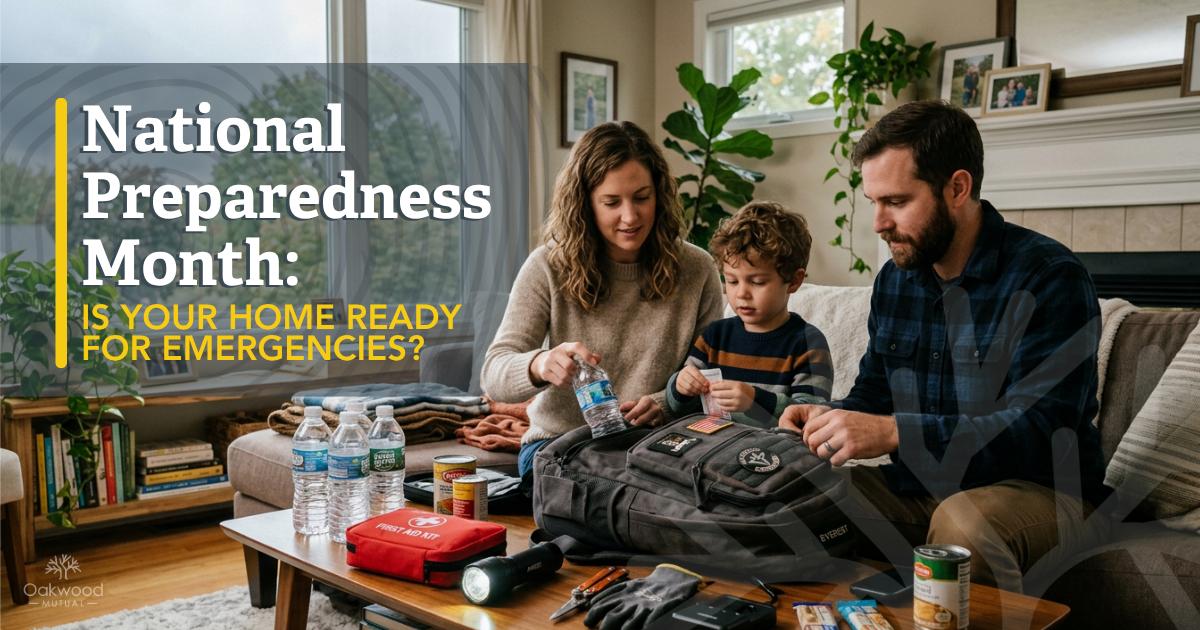
 September is National Preparedness Month, and it’s the perfect time to ask a simple question: if something happened tonight, would your household be ready? Whether it’s a severe storm, a house fire, or an unexpected evacuation, the families who come through an emergency with the least stress are almost always the ones who prepared before it happened.
You don’t need to overhaul your entire routine this month. Three focused steps, an emergency kit, a communication plan, and a place for your key documents, will put you miles ahead if disaster strikes.
 Step 1: Build (or Refresh) Your Family Emergency Kit
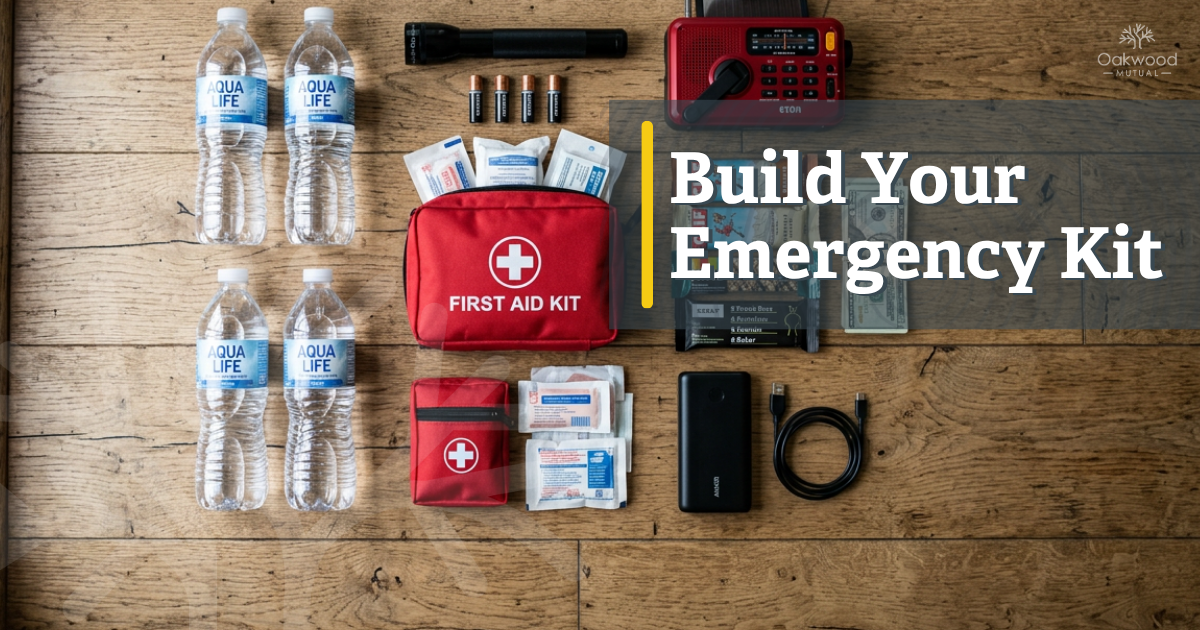
If you already have a kit tucked away in a closet, September is a good excuse to pull it out and check the contents. If you don’t have one yet, start simple. A basic kit should cover at least 72 hours and include:
- Water — one gallon per person, per day
- Non-perishable food and a manual can opener
- Flashlights and batteries (skip candles, they’re a fire risk of their own)
- A first aid kit and any prescription medications
- A battery powered or hand crank radio for weather updates if the power goes out
- Phone chargers and a portable battery bank
- Cash in small bills, since ATMs and card readers may be down
- Copies of important documents (more on that below)
- Supplies for pets, including food, water, and any medications
Check expiration dates on food, water, and medications at least once a year. September is as good a reminder as any to mark it on the calendar for good.
 Step 2: Write a Household Communication Plan
Emergencies rarely happen when the whole family is together in one room. A communication plan answers the questions you don’t want to be figuring out in the moment:
- Who is our out of town contact if local phone lines are jammed?
- Where do we meet if we can’t get home, one near the house and one outside the neighborhood?
- Does everyone in the household, including kids, know how to send a text (which often works even when calls won’t go through)?
- Who checks on elderly relatives or neighbors who might need help?
Write it down, share it with everyone in the household, and keep a copy in your emergency kit. A plan that only lives in one person’s head isn’t much of a plan.
 Step 3: Gather Your Key Documents, Including Your Insurance Policies
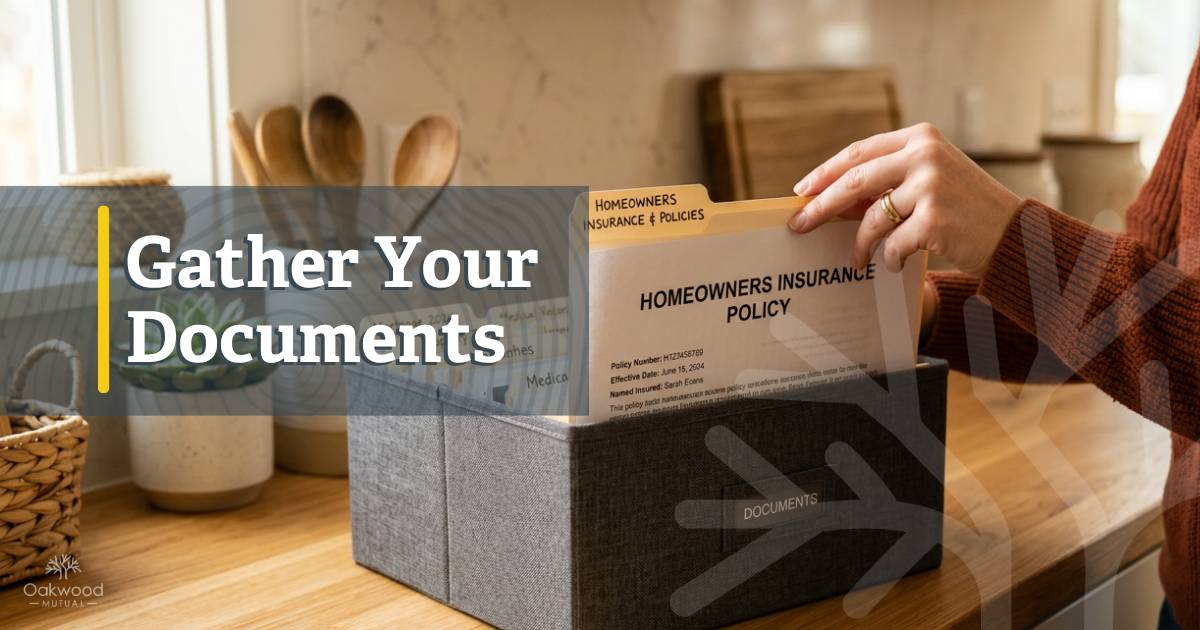
This is the step people skip, and it’s often the one they wish they hadn’t when it’s time to file a claim. Put together a grab and go folder (or a fireproof box, or a secure digital backup) with:
- Homeowners or renters insurance policy documents and your agent’s contact information
- Photo ID and passports
- Birth certificates and social security cards
- A home inventory, photos or video of your belongings, room by room
- Medical records and insurance cards
- Bank and account information
If you’re not sure what your policy actually covers in a disaster, or how quickly you could put your hands on it if you had to leave in ten minutes, that’s worth fixing before an emergency, not during one. Our post on what to expect when filing a claim walks through the process so there are no surprises, and our guide to when to file a claim versus paying out of pocket can help you think through the decision ahead of time.
Preparedness Is a Habit, Not a One Time Project
None of this needs to happen in a single weekend. Build the kit this week, write the plan next week, and gather your documents the week after. By the end of September, your household will be genuinely ready, not just for the emergencies we plan for, but for the ones we don’t see coming.
If you have questions about your coverage or want help understanding what your policy protects in a disaster, our team is always happy to talk it through. You can also find your local Oakwood Mutual agent here.
Stay safe and stay ready, from all of us at Oakwood Mutual.