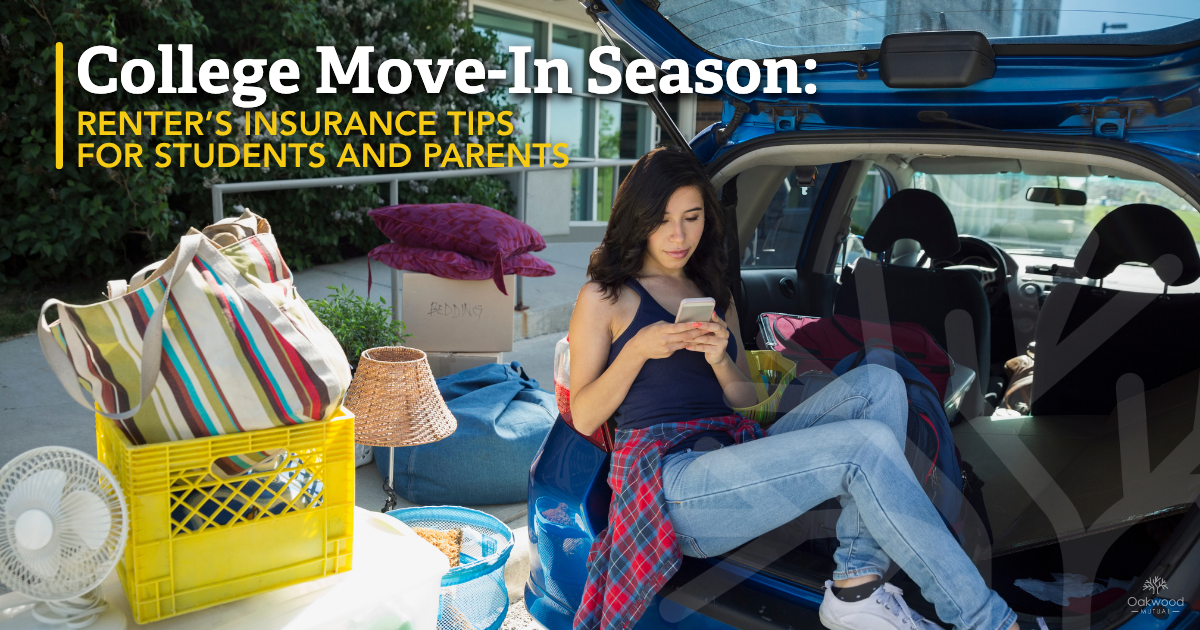
 The dorm fridge is loaded in the truck bed, the extra-long twin sheets are packed, and somewhere on a family group chat there’s a countdown to move-in day. For Indiana families sending a student off to college this month, it’s an exciting and slightly chaotic time. In the middle of hauling boxes up three flights of stairs, insurance probably isn’t top of mind, but it should be. A student’s laptop, phone, bike, and everything else they’re bringing to campus needs to be protected, and that protection often looks different than parents expect.
Here’s what families should know before move-in weekend.
Does a Parent’s Homeowners Policy Cover a Student at School?
Sometimes, but not always, and rarely completely. Many homeowners policies extend some personal property coverage to a dependent living away at school, especially if the student is living in a dorm and still claimed as a dependent on the parents’ tax return. But that coverage usually comes with lower limits than what applies at the family home, and it can disappear entirely once a student moves off campus into an apartment or house.
That gap is exactly where renters insurance steps in. A renters policy in the student’s name covers their belongings on their own terms, no matter where they’re living, and adds liability protection in case someone is injured in their space or they accidentally cause damage to the property.
The safest move is to check the actual policy language rather than assume. Our team is always happy to walk through what a specific policy covers before move-in day, not after something happens.
 Dorm vs. Off-Campus: Why It Matters
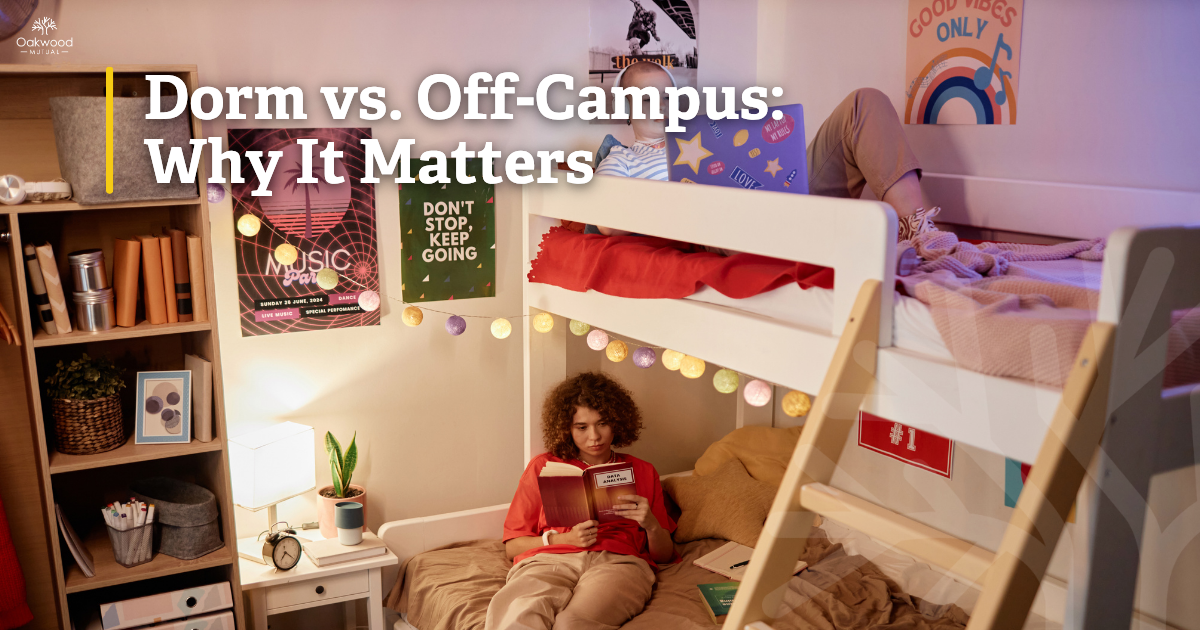
Dorms are often (partially) covered under a parent’s homeowners policy, but the coverage is usually capped at a percentage of the total personal property limit, which may not stretch far once you add up a laptop, a phone, textbooks, a mini fridge, and a closet full of clothes.
Off-campus apartments and houses typically fall outside a parent’s homeowners policy altogether. If a student is signing their own lease, most landlords now require proof of renters insurance before handing over the keys, and even when it’s not required, it’s worth having.
Either way, a standalone renters policy is inexpensive (often under $15 to $20 a month) and gives students their own coverage that travels with them from dorm to apartment to their first place after graduation.
 What Renters Insurance Actually Covers
A basic renters policy generally protects against:
- Personal property loss from fire, theft, vandalism, or certain water damage, covering electronics, furniture, clothing, and other belongings
- Liability protection if a guest is injured in the student’s space or the student accidentally damages someone else’s property
- Additional living expenses if the unit becomes temporarily unlivable due to a covered event
It’s worth noting what it typically does not cover, like flood damage or a roommate’s belongings unless they’re also named on the policy. Reading the fine print now avoids a surprise later, and if a claim does ever come up, knowing what to expect from the process makes it much less stressful.
A Few Practical Move-In Tips
- Take photos or a quick video of the student’s belongings before they head to campus. It makes filing a claim faster if something is ever lost, stolen, or damaged.
- Ask about bundling. Students on a parent’s auto or renters policy may qualify for a discount, and some policies come with perks families don’t realize they already have.
- Double-check bike and electronics coverage. High-value items like bikes, musical instruments, or gaming setups sometimes need to be scheduled separately for full coverage.
- Revisit coverage each year. A student’s living situation often changes year to year, from dorm to apartment to a house with roommates, and the right coverage should change with it.
 Send Them Off With One Less Thing to Worry About
Move-in day already comes with enough to think about. Making sure a student’s belongings are properly covered is one box that’s easy to check off ahead of time, and it gives both students and parents real peace of mind once the dorm room door closes and the goodbyes are said.
If you’d like to talk through options for a student heading to campus this month, our team is here to help. We’ll help you find the right coverage before the moving truck even leaves the driveway.
Good luck this move-in season from all of us at Oakwood Mutual.
Looking for more tips? Check out our past posts on Protecting Your Home While You Travel, What to Expect When Filing a Claim, Finding an Agent and Questions to Ask, and Hidden Benefits of Oakwood Policies for more ways to protect what matters most.