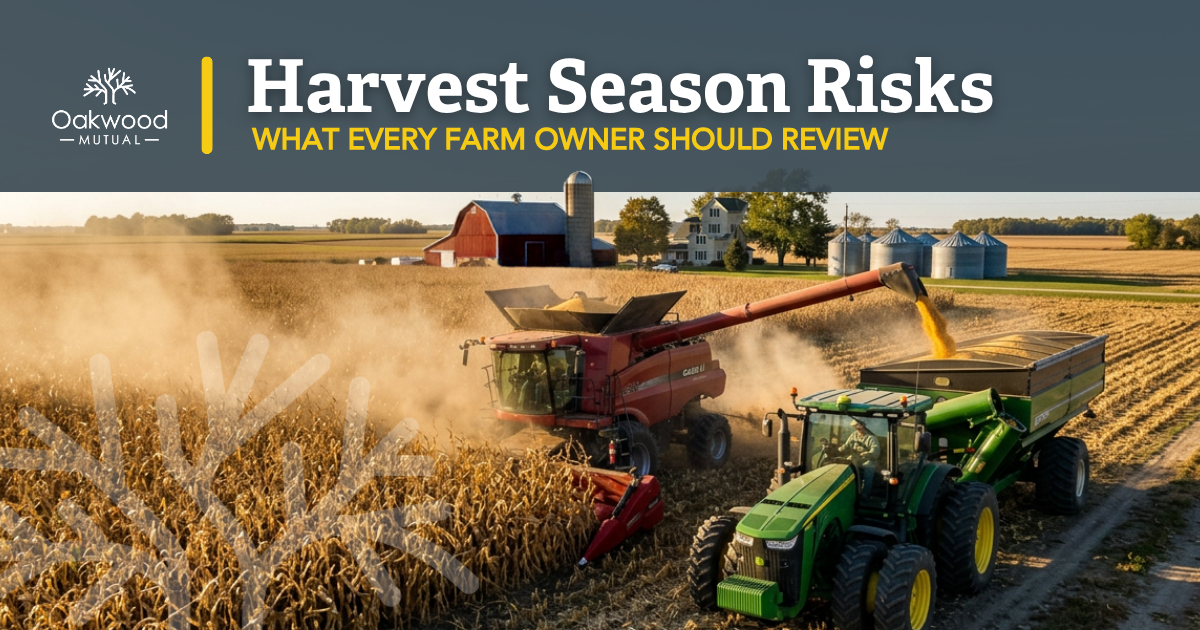
Harvest is the busiest, most rewarding stretch of the farm year. It is also when the most can go wrong. Combines run late into the night, grain carts crowd rural roads, extra hands join the crew, and Indiana weather can swing from warm and dry to a freezing, windy rain in a single week. That combination of heavy equipment, long hours, and unpredictable weather makes October the right time to step back and review your risks and your coverage. Here is what every farm owner should look at before, and during, harvest.
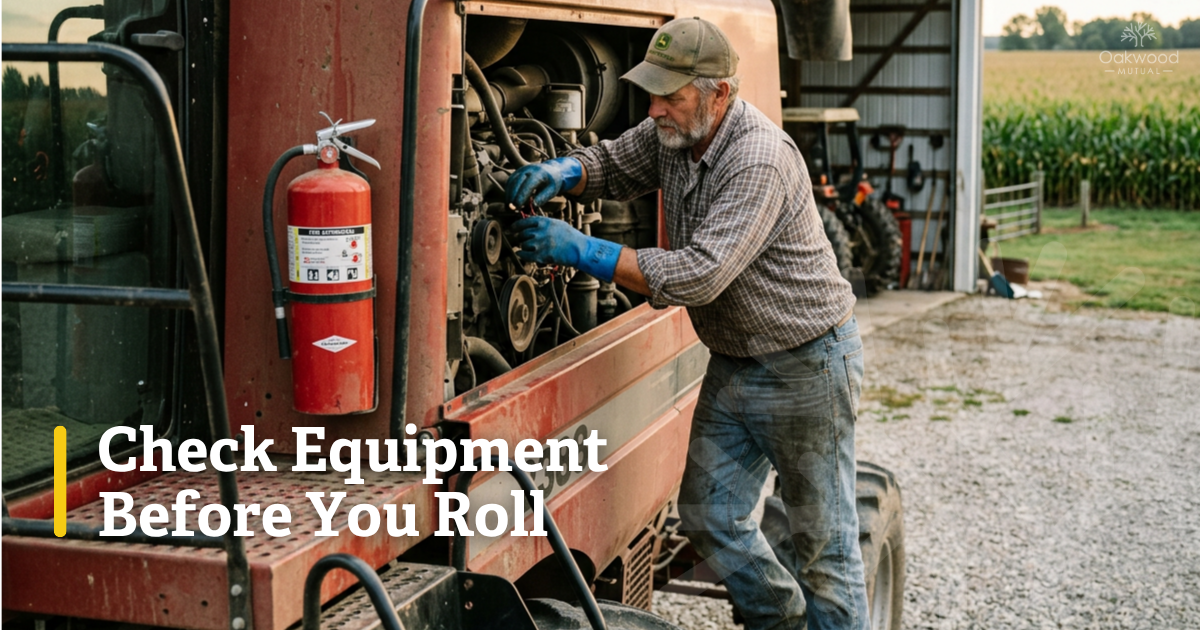 Equipment Use: Inspect Before You Roll
Your equipment works harder in the next few weeks than at any other time of the year, and a breakdown or fire in the middle of harvest can cost far more than the repair itself.
- Clean out crop residue daily. Chaff, dust, and dry stalks build up around engines, exhaust, and bearings. Combine fires often start right there.
- Carry fire extinguishers on every combine and tractor, and check that they are charged. Dry fields and hot equipment are a risky mix, much like the backyard hazards we covered in our summer fire safety guide.
- Check shields and guards on PTOs, augers, and belts. Never clear a plugged head or auger with the machine running.
- Make sure you are visible on the road. Slow-moving vehicle emblems, working lights, and flashers help other drivers give you room.
While you are at it, take stock of what you actually own. New or upgraded equipment, rented machines, and equipment borrowed from a neighbor may not be covered the way you assume. Your agent can confirm what is on your policy today.
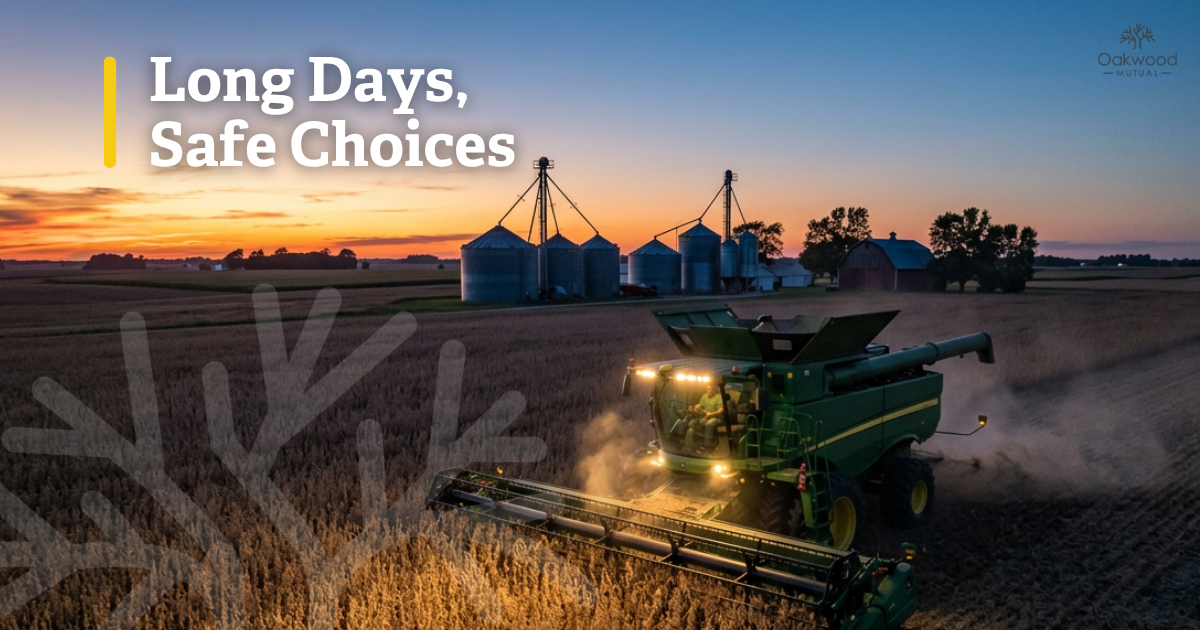 Long Hours: Fatigue Is a Real Safety Risk
Harvest days that start before sunrise and end well after dark take a toll. Tired operators make slower decisions, and many serious farm injuries happen when someone is rushing to finish one more load.
- Build in breaks and rotate operators when you can.
- Treat grain bins with extra caution. Never enter a bin while unloading equipment is running, and never work in one alone. Flowing grain can trap a person in seconds.
- Brief seasonal help and family members on equipment, bins, and road safety before they start, especially younger helpers.
Extra hands also bring coverage questions. If you hire seasonal workers or have friends and family pitching in, talk with your agent about how your farm liability coverage applies if someone is hurt on your property.
Weather Changes: Fall Storms and Early Frost
October weather in Indiana keeps farmers guessing. Strong fall winds, heavy rain, and hail can damage buildings, bins, and stored crops, and an early frost can push the whole schedule into a scramble.
- Walk your property and check roofs, doors, and siding on barns, machine sheds, and other structures. Our post on the hidden risks of outbuildings covers what to look for.
- Look up. Dead or leaning trees near barns, bins, and power lines are a common source of storm damage. Learn more in How Trees Impact Your Insurance.
- Keep a storm plan ready for livestock, equipment, and people. The same steps from our National Preparedness Month guide work on the farm, too.
- Photograph your equipment, buildings, and stored grain before harvest wraps up. Good records make any claim smoother, and our guide on what to expect when you file a claim walks through the process.
 Coverage Gaps: What Has Changed Since Your Last Review?
Farms change fast. A policy that fit your operation three years ago may not match what you are running today. Common gaps show up in a few places:
- New or replaced equipment that was never added to your policy, or equipment values that are out of date.
- Grain bins and stored crops, especially if you added storage or are holding more grain than usual this year.
- New or renovated buildings like machine sheds, shops, or livestock barns.
- Custom work for neighbors, such as harvesting or hauling for someone else, which can raise liability questions.
- Farm vehicles on public roads. Oakwood Mutual policyholders can cover farm vehicles under a standard auto policy by endorsement through Grinnell Mutual Reinsurance Company.
- Seasonal side businesses, like a pumpkin patch, corn maze, or roadside stand, where visitors come onto your property.
If something does happen, it also helps to know your deductible and when a claim makes sense. Our post on when to file a claim and when to pay out of pocket can help you weigh it.
Review Now, Harvest With Confidence
You put everything into bringing in a good crop. A quick review of your equipment, your crew, your weather plan, and your coverage helps protect that work. If you are not sure where to start, find your local Oakwood Mutual agent and set up a time to talk before harvest winds down.
Stay safe out there this season.