 What to Expect When You File a Claim with Oakwood Mutual
Filing an insurance claim usually means something unexpected has happened. A storm caused damage. A fire occurred. A loss disrupted normal life.
In those moments, uncertainty can make an already stressful situation feel even more overwhelming. One of the most helpful things we can do is explain what the claims process actually looks like and what policyholders can expect.
Here is a step-by-step look at how the claims process works at Oakwood Mutual.
 Step 1: Reporting the Claim
The process begins when a policyholder reports a loss.
Once a claim is submitted, the insured is contacted as soon as possible, typically within 24 to 48 hours. Early communication helps determine the severity of the loss and what next steps are needed.
To help the process move smoothly, it is important to provide as much information as possible at the beginning. Helpful details include:
- What exactly happened
- The date and time of the loss
- Whether police or the fire department were contacted
- The main contact person for the claim
- The best phone number for follow-up
Clear and complete information allows the adjuster to begin assessing the situation quickly and accurately.
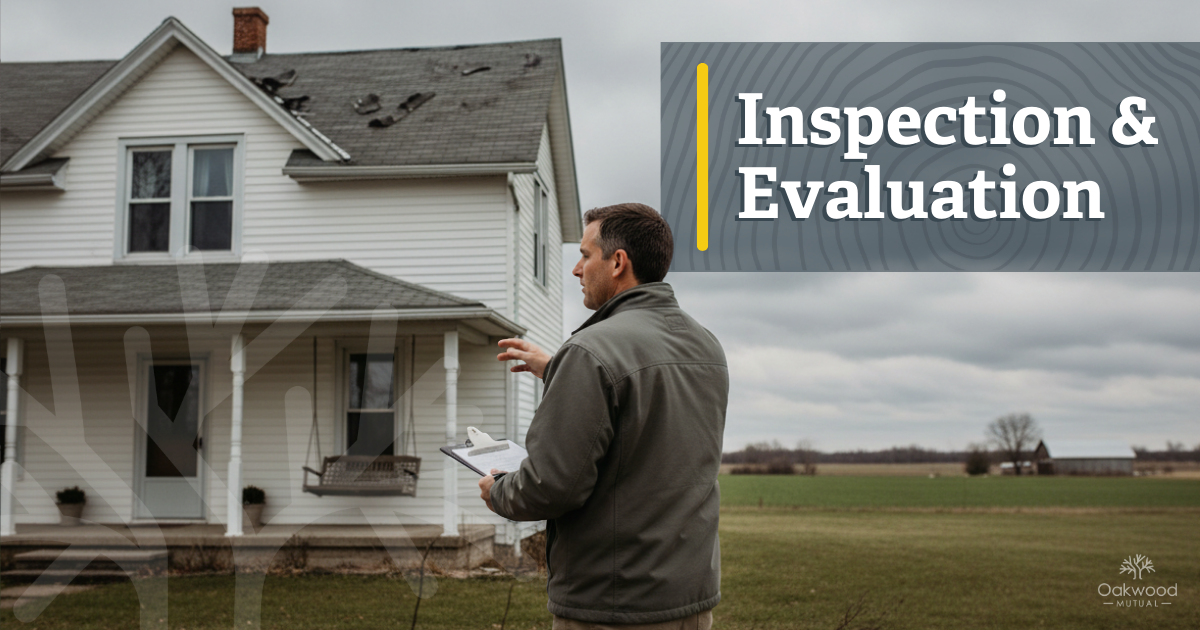 Step 2: Inspection and Evaluation
Depending on the type of loss, a site inspection may be conducted. An Oakwood adjuster will evaluate the damage and develop an estimate.
One common misunderstanding about insurance claims is that the insurance company sends someone out to fix the damage. In reality, the adjuster’s role is to assess the loss and determine what the policy covers. The policyholder typically arranges for repairs, while the adjuster focuses on evaluating the damage and coverage.
During this stage, communication remains key. The claims team prioritizes contacting the insured quickly to understand the severity of the situation and explain the next steps.
Step 3: Coverage Determination and Payment
After the damage has been evaluated, the adjuster determines what is covered under the policy.
If coverage applies, the policyholder will be contacted to explain what will and will not be covered. A letter outlining the decision is sent along with a proof of loss form and payment, if applicable.
If coverage does not apply, a denial letter is sent explaining the decision.
Transparency is important throughout this stage. Clear documentation ensures that policyholders understand how the claim was handled and how decisions were made.
What Helps a Claim Move More Smoothly
When asked what can slow down a claim, the claims team emphasized one word: communication.
Delays often occur when calls are not returned in a timely manner or when important information is missing at the start of the process. Providing detailed information early and staying in contact with the adjuster helps keep the claim moving forward.
In short, the more information provided at the beginning, the smoother the process tends to be.
Why Understanding Coverage Before a Loss Matters
Understanding your coverage before something happens can significantly impact the claims experience.
When policyholders know what their policy includes and understand how to protect their property, they are often able to mitigate damage more effectively. Taking reasonable steps to prevent further damage can help restore the property more quickly.
Having a clear understanding of coverage also reduces confusion during the claim itself. When expectations are aligned before a loss, the process tends to feel more straightforward.
 What Makes Oakwood’s Claims Process Different
One of the key differences at Oakwood Mutual is that we are local.
If policyholders have questions, they can stop by the office and speak with someone directly. Being local also allows for quicker communication and faster check delivery.
At a mutual insurance company like Oakwood, the focus remains on serving policyholders and the community. The claims process is not handled through a distant call center. Instead, local adjusters and staff work directly with policyholders throughout the claim.
Local agents also play an important role. Agents can help policyholders file a claim, answer questions about coverage, and explain what to expect. Because they are familiar with the policy and the community, they are often a valuable resource during stressful situations.
Filing a claim does not have to feel confusing or uncertain.
When a loss occurs, Oakwood’s claims team works to respond quickly, communicate clearly, and guide policyholders through each step of the process. Providing detailed information early, maintaining communication, and understanding coverage ahead of time can all help the experience go more smoothly.
If you ever have questions about your policy or how the claims process works, your local Oakwood agent is a good place to start.
Preparedness begins with understanding. And understanding begins with a conversation.